 rumaruma
Can You Live in Your House During Renovation? What Malaysian Homeowners Should Know
Which renovation phases you can live through, which ones to move out for, and how to keep dust, noise and safety under control while you stay.
On this page
- Living in Your House During Renovation: Phase by Phase
- Set Up a Clean Zone Before Work Starts
- Dust Control: The Daily Routine
- Noise, Working Hours and JMB Rules
- Surviving Without a Kitchen or Bathroom
- Safety With Kids, Elderly Parents and Pets
- Valuables, Access and Security
- Agree House Rules With Your Contractor
- Before Work Starts: Your Checklist
It’s the first morning of works. There’s a fine grey film on the rice cooker, the hacking starts at 9am sharp, and the kitchen sink you used last night is now a hole in the wall. You chose living in your house during renovation to save on rent. By lunchtime you’re wondering whether that was the right call.
You can live in your house during most of a renovation. The exceptions are a handful of short, intense phases. If you plan around those, set up one properly sealed room to live in, and agree some house rules with your contractor, staying put is very manageable.
This guide covers which phases to stay through and which to leave for, and how to make the weeks in between feel like home rather than a building site.

Living in Your House During Renovation: Phase by Phase
Not every week of a renovation is equally hard to live through. Hacking is loud and filthy for a few days. Carpentry installation, by contrast, is mostly drilling and the occasional sawdust pile.
Here’s how the main phases compare for a family staying at home. Durations are for a typical 1,000 sq ft condo; see our room-by-room renovation timeline for the full breakdown.
| Phase | Typical duration | Livability | Why |
|---|---|---|---|
| Hacking and demolition | 3–7 days | Hard | Constant noise, heavy dust, debris in the corridor, water and power cut off at times |
| Plumbing and electrical (M&E) | 2–4 weeks | Difficult | Water and power shut off in stretches; wall chasing creates dust; the bathroom may be out of action |
| Waterproofing and curing | 3–5 days | Fine, if you have a second bathroom | The bathroom is unusable while the membrane cures and is water-tested |
| Plaster ceiling and partitions | 1–2 weeks | Manageable | Fine plaster dust, but quieter than hacking |
| Tiling and flooring | 1–3 weeks | Difficult | You can’t walk on fresh tiles; rooms close off one at a time |
| Carpentry installation | 5–10 days | Manageable | Drilling and some sawdust, mostly in one room at a time |
| Painting | 3–7 days | Manageable with ventilation | Paint smell for a few days; low-VOC paint helps |
| Final clean and snagging | 3–7 days | Easy | Small fixes only |
The rule of thumb: move out for hacking, and for wet works if you only have one bathroom. For most condo renovations that adds up to one to three weeks away, not the whole project.
When Moving Out Entirely Makes Sense
Some households are better off leaving for the whole renovation:
- A newborn or young toddler at home. Fine dust and open power points are hard to manage around a crawling baby.
- Anyone with asthma or a respiratory condition. Silica dust from cutting tiles and concrete is a genuine health risk, not just a nuisance.
- Elderly parents who can’t easily move away from the noise. Eight hours of drilling a day is exhausting for someone who spends the whole day at home.
- A one-bathroom unit having that bathroom redone. There’s no workaround for this one.
- A full gut renovation. If every room is being hacked at once, there’s nowhere to set up a clean zone.
The cost question is simple to work out. Compare one to three weeks of short-stay accommodation, or a stay with family, against a month or more of rent. Then add the cost of your time cleaning, and the risk of a delay that keeps you in the mess longer.
Set Up a Clean Zone Before Work Starts
The single most useful thing you can do is pick one room to live in and seal it off properly. Usually it’s the master bedroom, as long as it isn’t being renovated, because it has its own bathroom and aircon.
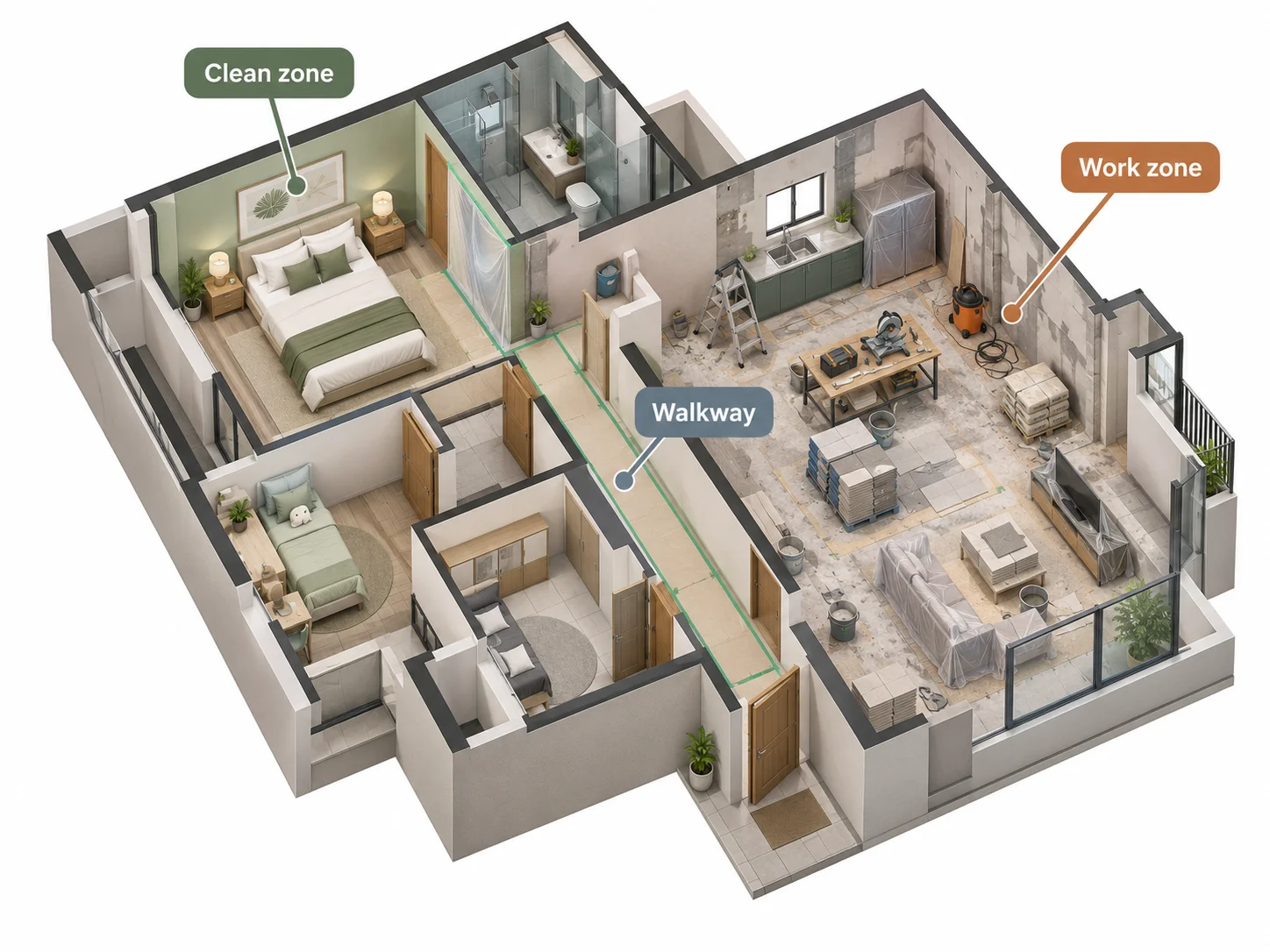
Set it up the weekend before work starts:
- Seal the door. Tape heavy plastic sheeting over the doorframe with a zip door in the middle, or tape the gaps around a closed door. Dust travels through the gap at the bottom more than anywhere else.
- Move in what you need. Clothes for the next few weeks, chargers, medicines, documents, laptops, the kids’ school things. Anything left in the work zone gets dusty.
- Clear the path. Keep a clear walkway from the main door to your clean zone, and lay a damp mat or towel at the threshold to catch dust from your shoes.
- Keep one bathroom out of scope for as long as possible, and agree in advance when it will be unusable.
A good clean zone is the difference between coming home to a building site and coming home to your room. Close the door, switch on the fan, and the renovation could be in another flat.
Dust Control: The Daily Routine
Renovation dust is finer than household dust, and it gets everywhere. Malaysian humidity makes it worse. Damp air turns fine plaster and cement dust into a thin paste on surfaces, and it smears rather than wiping off when you go at it with a dry cloth.
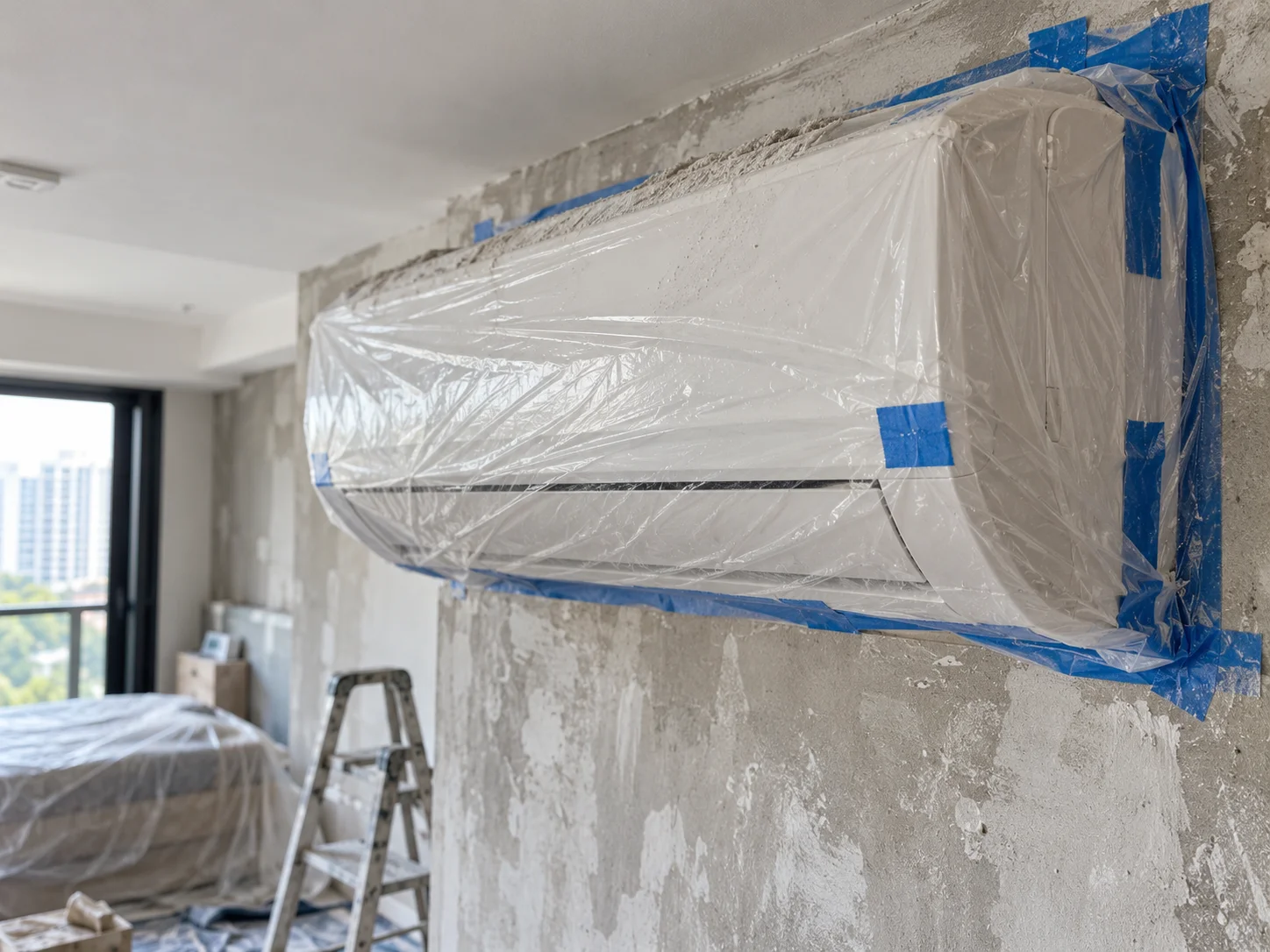
Protect Your Aircon First
Switch off and cover any aircon unit in a room where hacking, sanding or tile-cutting is happening. A running indoor unit pulls dust straight into the coil and filter, and a clogged unit needs a chemical wash afterwards. Tape plastic over the unit and any ceiling vents in the work zone until the dusty phases are over.
In your clean zone, keep the aircon running with the door shut, and clean the filter weekly while works are on. The same sealing habits from our guide to protecting your home from haze work here: close gaps, run filtered air, and keep the room under positive pressure where you can.
Clean Damp, Not Dry
- Use a vacuum with a HEPA filter, not a broom. Sweeping just lifts fine dust back into the air.
- Wipe with a damp microfibre cloth, then a dry one. Dry dusting spreads it.
- Cover what you can’t move. Old bedsheets over sofas, cling film over TV screens and routers, and plastic bags over anything with vents.
- Clean your clean zone every evening. Ten minutes a day is far easier than a weekend of scrubbing.
If you already own an air purifier, keep it in the clean zone on its highest setting during the dusty phases. Our honest look at what an air purifier can and can’t do applies just as well to renovation dust: it helps in one sealed room, not a whole flat with open doors.
Noise, Working Hours and JMB Rules
Most condos limit renovation work to set hours, typically 9am to 5pm, Monday to Saturday, with no work on Sundays and public holidays. Some JMBs and MCs also ban noisy work such as hacking on Saturdays. Check your building’s renovation rules before you plan your weeks.
For condo owners, the Joint Management Body (JMB) or Management Corporation (MC) will usually also require:
- A renovation application with drawings and contractor details, approved before work starts
- A refundable renovation deposit, usually RM500–RM5,000 depending on the building
- Lift protection on the days materials or debris are moved
- Debris removal only at set times or through a service lift
For landed homes, the local authority (PBT), such as DBKL or MBPJ, sets the rules on permits for structural work, but your neighbours are the bigger day-to-day issue. A friendly note or a box of kuih before hacking starts goes a long way.
If you work from home, plan your calls around the noise. Hacking days are a write-off for focused work. Take leave, work from a café or co-working space, or ask your contractor to warn you a day ahead of the loudest jobs.
Surviving Without a Kitchen or Bathroom
Losing the kitchen is the hardest part of staying at home for most families. With a little setup, a temporary kitchen corner in the clean zone or the dining area will cover breakfasts, simple meals and drinks.
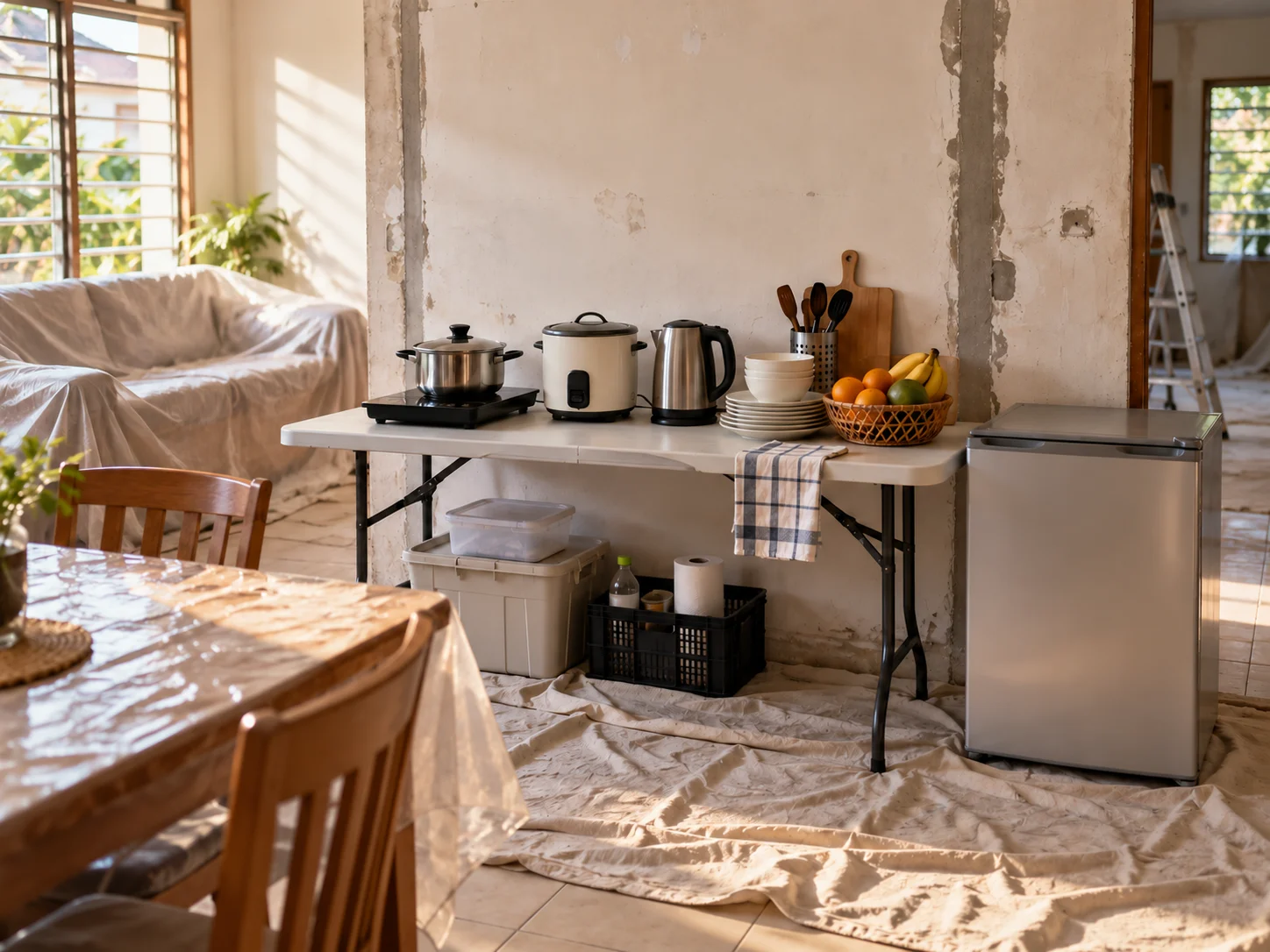
Temporary Kitchen Checklist
- Portable induction cooker and one pot
- Rice cooker and electric kettle
- A small fridge, or the main fridge moved to a dust-free corner
- Disposable or easy-wash plates, cups and cutlery
- A large basin for washing up in the bathroom
- A rough budget for more takeaway and food delivery than usual
Plug the cooker and kettle into a socket that isn’t on a circuit being worked on. Ask your electrician which circuits will be switched off, and when.
Sequence the Works So One Bathroom Always Works
If you have two bathrooms, ask your contractor to finish one completely, including waterproofing, curing and the water test, before starting on the second. It adds a few days to the schedule, but it means you’re never without a toilet and shower.
If you have one bathroom and it’s being redone, that’s your cue to move out for the wet-works phase. Waterproofing needs at least 24–48 hours to cure before the water test, and you can’t rush it without risking a leak into the unit below.
Safety With Kids, Elderly Parents and Pets
A renovation site has hazards that don’t exist in a finished home: exposed wiring, open power points, wet tiles, sharp offcuts and solvents. Most accidents happen in the evening, after the workers have gone home and family life spills back into the work zone.
- Walk through the site every evening. Check for open power points, loose wires, nails and broken tiles before anyone wanders in.
- Keep children and pets out of the work zone entirely. A baby gate or a closed door is easier than watching them every minute.
- Ask workers to lock tools away at the end of each day, or store them in one room you can close off.
- Ventilate during and after painting. Open windows and run a fan for a few days. Low-VOC paints from brands like Nippon Paint and Dulux reduce the smell but don’t remove it.
- Watch out for fresh tiles and floors. Mark areas that can’t be walked on with tape so no one steps on a newly laid floor.
Valuables, Access and Security
When you stay at home, you’re sharing your space with workers every day. A few simple arrangements protect both you and them:
- Lock valuables away in your clean zone or move them to a family member’s house.
- Photograph everything before work starts, including the existing floors, furniture and the common corridor. This protects your JMB deposit and settles disputes about damage.
- Agree on key and access cards. Who holds them, and whether workers can enter when you’re out.
- Know who’s on site. Ask your contractor for the names of the main workers and subcontractors, and when each trade is coming.
Agree House Rules With Your Contractor
Staying at home works best when you and your contractor agree the ground rules before work starts. Put them in writing, ideally in the quotation itself, so they’re part of the job rather than a favour you have to ask for.

Ask for:
- A daily clean-up before workers leave: debris bagged, floors swept, tools put away.
- A fixed finishing time, so you know when you can have your home back each evening.
- A day’s notice before water or power is cut off, or before the noisiest jobs.
- A toilet arrangement for the workers, so it isn’t your only working bathroom.
- A single point of contact for problems, rather than raising them with whoever happens to be on site.
When you’re comparing renovation quotations, check whether daily cleaning, debris removal and protection of floors and furniture are included. They often aren’t, and they matter far more when you’re living there.
Before Work Starts: Your Checklist
- Decide which phases you’ll move out for, and book somewhere to stay
- Check your condo’s working hours and renovation rules with the JMB or MC
- Choose your clean zone and seal it the weekend before
- Move clothes, documents, medicines and valuables into the clean zone
- Cover the aircon units and vents in the work zone
- Set up a temporary kitchen corner
- Agree the bathroom sequence with your contractor
- Photograph your home and the common areas
- Put the daily clean-up, finishing time and notice arrangements in writing
- Map the dusty weeks on your renovation timeline
Staying at home through a renovation means a few hard weeks and a lot of wiping. In return you get to watch your home take shape day by day: the new tiles going down and the carpentry going up, and you catch a crooked socket before it’s plastered over. Plan around the loud weeks, protect one room, and the evening you finally take the plastic off the door will feel like moving into a new home.