Our Location
304 North Cardinal St.
Dorchester Center, MA 02124

How to design a Scandinavian home office in a Malaysian condo — bright, functional, and built for focus without feeling cold.
Working from your dining table with the laptop balanced on a stack of magazines gets old fast. If you’ve been meaning to carve out a proper corner for focused work, Scandinavian design is one of the most forgiving styles to do it in — it was built for small spaces and long indoor hours in the first place.
Where Japandi leans warm and earthy, Scandinavian design is its lighter, cooler-toned cousin — white walls, pale wood, and a discipline around clutter that makes even a 4×6 ft nook feel calm rather than cramped. This article breaks down how to bring that look into a Malaysian condo, room by room element, with local materials and realistic costs.
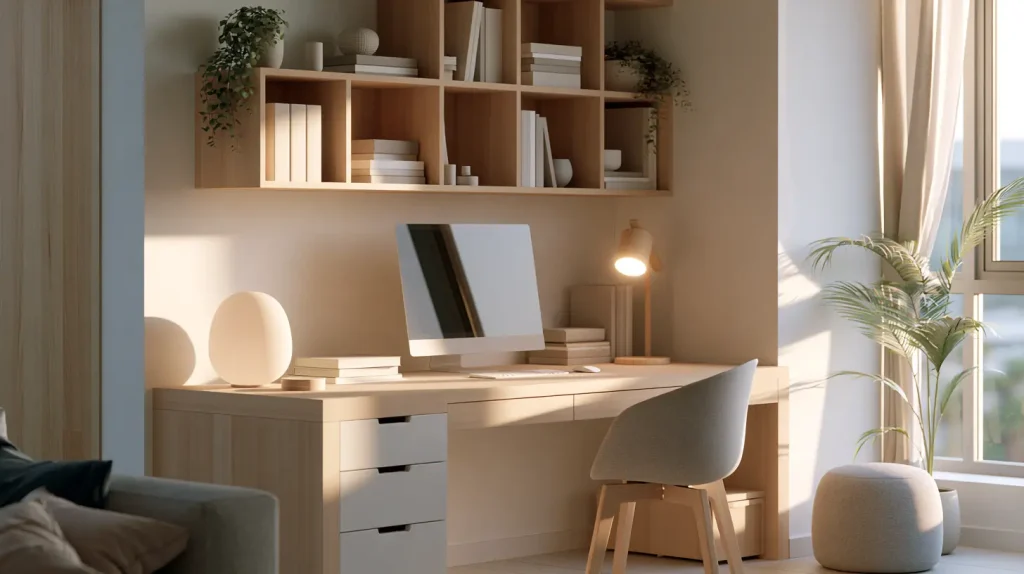
Scandinavian design comes from a climate that’s the opposite of ours — long dark winters where maximising every bit of daylight isn’t a preference, it’s survival. That obsession with light, paired with a “form follows function” mindset from Nordic design schools, is exactly what a good home office needs.
Strip away the cold-climate context and what’s left translates well to Malaysia: white and off-white walls that bounce light around a small room, pale wood that keeps a workspace feeling open rather than boxed in, and furniture chosen because it works — not because it fills space. For a home office squeezed into a condo corner, that discipline is the difference between a nook that helps you focus and one you avoid using.
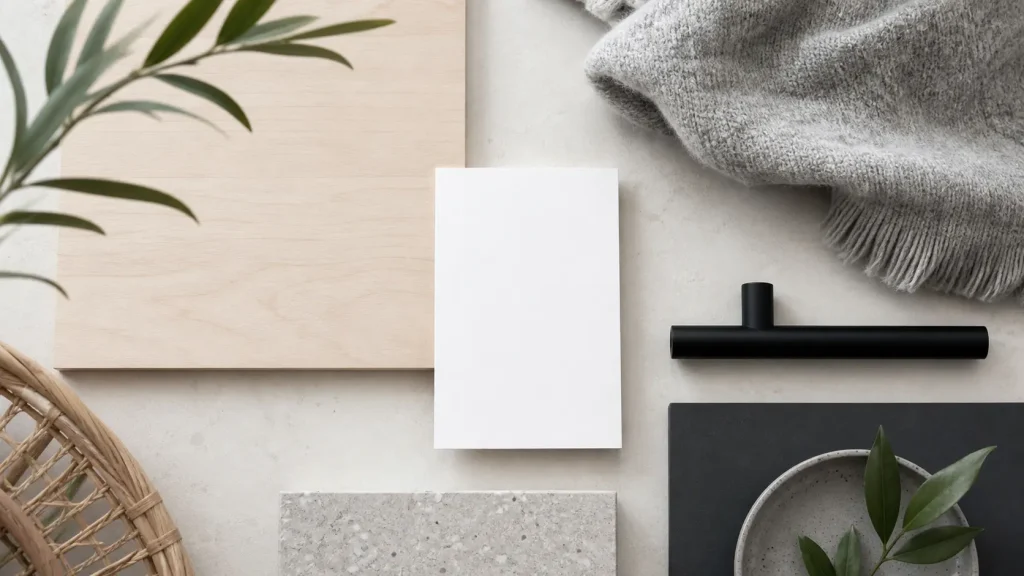
Here’s what makes this Scandinavian home office work — element by element.
The desk is the anchor of the room, and in Scandinavian style, it’s almost always pale wood — birch, ash, or a light oak finish rather than the darker walnut tones you’d see in mid-century styling. Pale wood keeps a small nook visually light, which matters when your “office” might only be a converted balcony or a corner of the bedroom.
Open shelving in the same tone above or beside the desk keeps storage visible and tidy rather than hidden behind bulky cabinet doors — a hallmark of the style’s function-first thinking. It also means you can see what you have, which cuts down on the clutter that tends to pile up in a work corner over time.
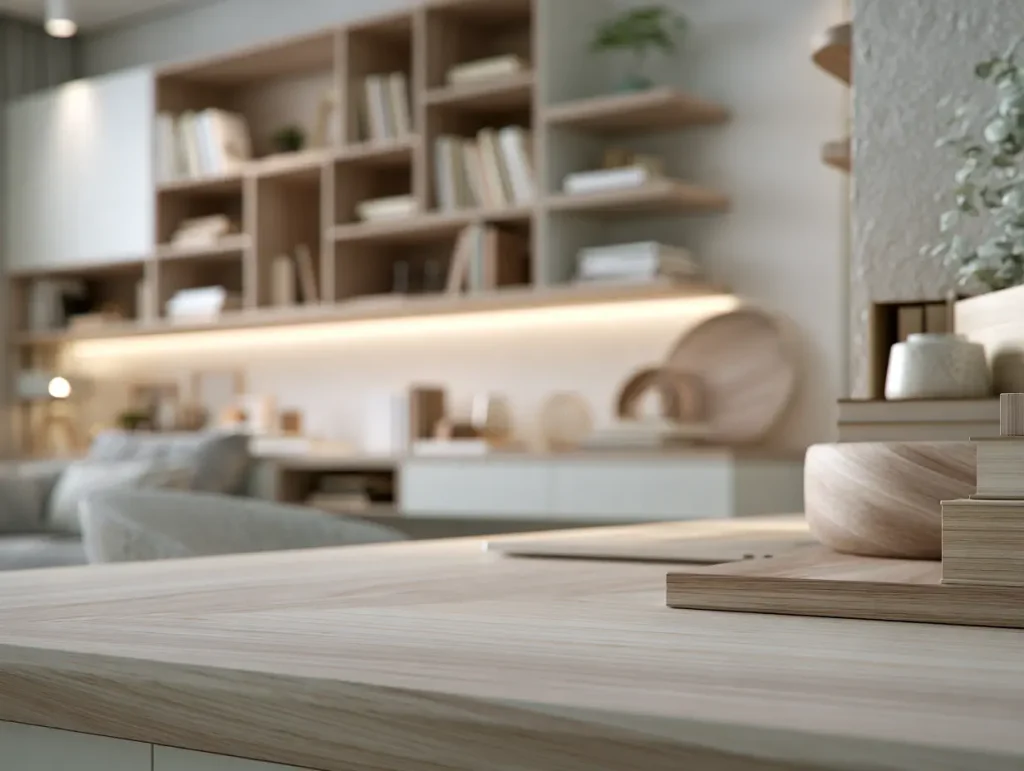
Scandinavian rooms lean almost entirely white or off-white — a cooler, cleaner white than the warm beige base you’d see in Japandi. In Malaysia’s bright equatorial light, this works especially well in a home office, since a crisp white wall behind your screen reduces glare-related eye strain compared to a dark or saturated backdrop.
If a fully white wall feels too clinical, a single soft grey or dusty blue accent wall behind the desk keeps the room from feeling like a hospital corridor while staying within the Scandinavian palette. Nippon Paint’s Cotton White or Dulux’s Whisper White are close matches for the base tone.
Most Malaysian condos don’t have a spare room for an office, so this look is built around a corner nook — typically a 4×6 ft to 6×8 ft footprint carved out of a bedroom, living room, or enclosed balcony. Scandinavian design’s minimal furniture footprint makes this realistic.
The formula: a compact desk (100–120cm wide) against the wall with the best natural light, a single task chair, and vertical shelving instead of a wide cabinet to keep the floor area clear. Floating shelves or a wall-mounted desk work especially well if floor space is tight — you lose the bulk of legs and drawers entirely.
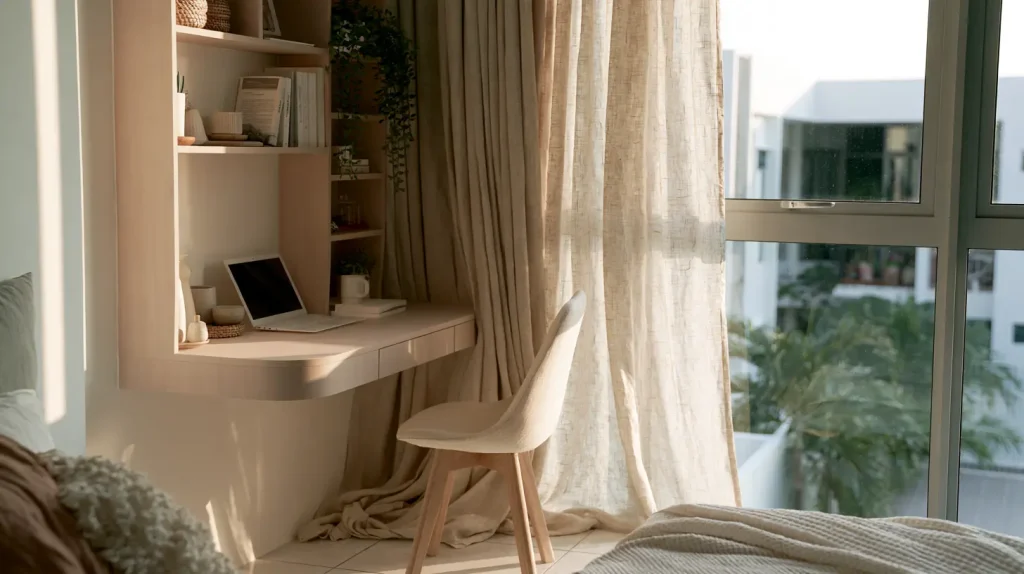
Cool-toned rooms risk feeling sterile, which is where Scandinavian design’s textile layer comes in — this is the hygge half of the equation. A wool or faux-sheepskin throw on the chair, a woven jute rug underfoot, and linen curtains in a soft neutral all add tactile warmth without introducing colour or clutter.
A home office lives or dies on lighting, and Scandinavian design’s answer is a mix of natural light maximisation and warm task lighting. Position the desk perpendicular to your best window if possible — facing it directly causes screen glare, facing away puts you in your own shadow.
For artificial light, a single articulated desk lamp with a warm white bulb (3,000K) does most of the work, supplemented by a pendant or floor lamp for ambient fill in the evening. Cool white overhead lighting — common in Malaysian condo ceiling fixtures — tends to flatten the pale wood and white palette into something closer to a clinic than a Scandinavian nook, so swap the bulb if you can.
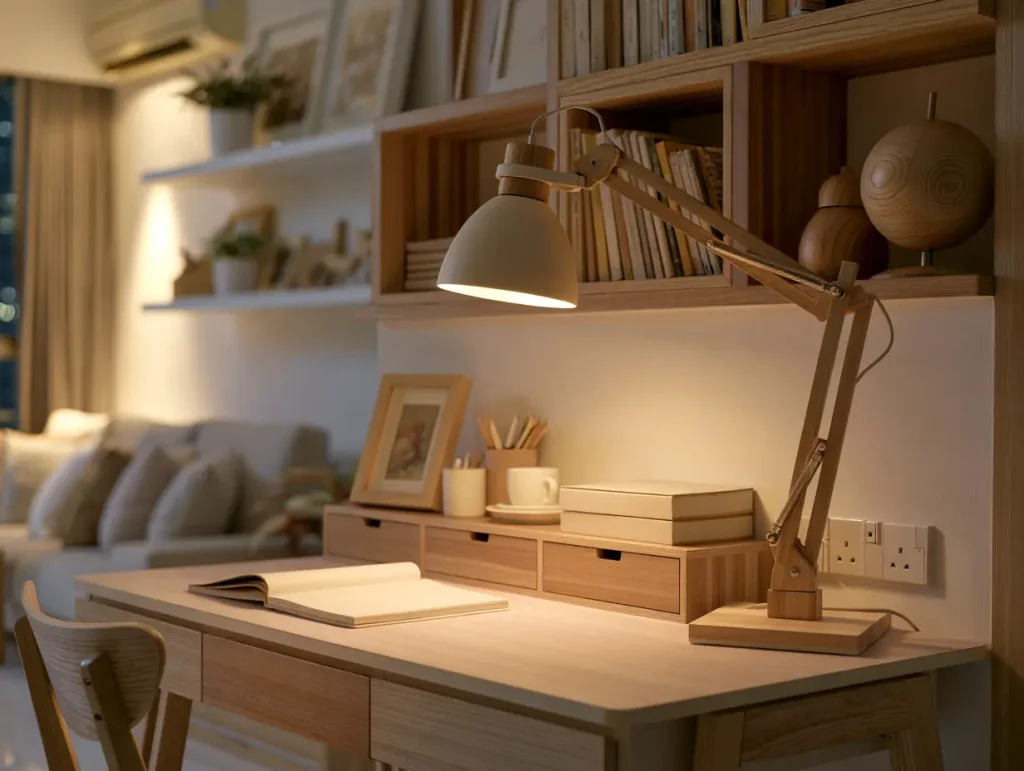
The palette in this room works on three tiers:
Keep the ratio roughly 75% base, 15% mid-tone, 10% accent — Scandinavian rooms read as calm precisely because the palette stays this restrained.
Genuine Scandinavian pieces are often solid pine, birch, or ash — beautiful, but not all of them are built for 70–90% year-round humidity without extra care. A few swaps keep the look intact without the maintenance headache.
If your Scandinavian nook is going into an enclosed balcony, check your JMB or MC house rules first — many strata buildings restrict permanent balcony enclosures, and some require approval even for glass or aluminium sliding partitions. Confirm this in writing before ordering materials.
If the conversion involves any electrical work — adding a power point or light fixture to a balcony — that also typically needs sign-off. Our guide on renovation timelines in Malaysia covers how long JMB approvals usually take once submitted.
| Element | Local Source | Estimated Cost |
|---|---|---|
| Pale wood desk (100–120cm) | IKEA (MICKE, LAGKAPTEN), local furniture stores | RM 250–900 |
| Open wall shelving | IKEA, Mr. DIY, Naiise | RM 60–300 per shelf |
| Task chair | IKEA, Shopee, local office suppliers | RM 150–600 |
| Jute or wool rug | IKEA, Cotton On Home, Zara Home | RM 100–400 |
| Linen curtains | IKEA, Naiise, Shopee local sellers | RM 60–200 per panel |
| Desk lamp (warm white) | IKEA, Mr. DIY, Shopee local sellers | RM 40–180 |
Prices above are indicative estimates for reference only. Actual costs will vary depending on your interior designer, contractor, material choices, and project scope.
For a typical 5×7 ft Malaysian condo home office nook:
| Scope | Budget Range |
|---|---|
| DIY-friendly refresh (desk, chair, textiles, lighting swap) | RM 800–2,500 |
| Mid-range (add shelving, rug, paint accent wall) | RM 3,000–6,000 |
| Full built-in (custom shelving, wall-mounted desk, electrical) | RM 8,000–15,000 |
Prices above are indicative estimates for reference only. Actual costs will vary depending on your interior designer, contractor, material choices, and project scope.
For a detailed breakdown of where renovation costs go, see our 2026 Malaysia renovation cost guide. If you’re weighing this against a fuller Japandi-style room instead, our Japandi living room breakdown covers the warmer, earthier take on the same minimalist philosophy.
A Scandinavian home office doesn’t feel calm because it’s white and minimal for the sake of it — it feels calm because every piece in it is doing a job. The pale wood desk keeps the room light. The open shelving keeps clutter visible and manageable. The wool throw stops the whole thing from feeling clinical.
That’s a useful lesson for a Malaysian condo corner that has to double as a workspace: restraint isn’t about having less, it’s about keeping only what earns its place. Get that right and a 5×7 ft nook can feel like a real office, not an apology for one.
Rumaruma is here to help you make design decisions with confidence — grounded in real local materials, real costs, and real Malaysian conditions. This breakdown is your starting point.
Start with the essentials — a pale wood desk, a warm task lamp, and one wall painted crisp white — and build the rest of the nook around what you actually use.
