Our Location
304 North Cardinal St.
Dorchester Center, MA 02124

Negotiating renovation costs isn't about squeezing your contractor — it's about knowing which numbers can move and which ones protect your home.
Negotiating renovation costs isn’t about squeezing your contractor — it’s about knowing which numbers can move and which ones protect your home.
You’ve got three quotations sitting in front of you, and they’re nowhere near each other — RM45,000, RM62,000, RM38,000 for what’s supposed to be the same scope of work. Your instinct is to go back to the cheapest one and ask for even more off, or to assume the priciest quote must be the “proper” one. Neither instinct is right.
Learning how to negotiate renovation costs means understanding that some line items — labour skill, waterproofing, electrical wiring — should never be the target of a discount, while others — timeline, material brand, payment structure — often have real room to move. Get that distinction wrong and you either overpay for nothing or save RM3,000 today and spend RM15,000 fixing a leak in two years.
This guide walks through what’s actually negotiable in a Malaysian renovation quotation, how to raise it with your contractor or interior designer without souring the relationship, and where to draw the line so “negotiated” doesn’t quietly become “compromised.”
Key Takeaways:

You can’t negotiate a number you don’t understand. Contractors and interior designers negotiate quotations for a living — if you walk in only knowing “this feels expensive,” you’re negotiating from a position of nothing.
Ask every contractor or interior designer for an itemized quotation — a breakdown by category (hacking, tiling, carpentry, electrical, painting) rather than a single lump sum. A lump-sum quote of “RM50,000 for the whole unit” gives you nothing to push back on, because you can’t tell if the number is inflated, fair, or actually too low to cover proper work.
Collect quotes from at least three to four sources, mixing CIDB-registered contractors and interior designers where relevant, so you’re comparing apples to apples on scope before you compare price.
Set your ceiling before the first meeting, not during it. If you haven’t worked out what you can actually afford versus what you’d like to spend, you’ll negotiate reactively — accepting whatever discount is offered instead of asking for the one that actually matters to you.
Our guide on how to set a realistic renovation budget covers how to build that ceiling properly, including the contingency fund you should never negotiate away to hit a lower headline price.
Before assuming the cheapest quote is the best deal, find out what’s actually different between them. A RM38,000 quote next to a RM62,000 quote for “the same” kitchen renovation usually means one of them has skipped something — thinner plywood carcasses, no waterproofing membrane under the sink cabinet, or a labour team that isn’t CIDB-registered.

This is the part most homeowners get backwards. They negotiate hardest on labour cost, the one line item that’s genuinely dangerous to discount, and leave real savings on the table elsewhere.
| Line Item | Why It’s Negotiable |
|---|---|
| Material brand or tier | Swapping a premium tile or countertop brand for an equivalent-grade local alternative can save 15–30% with no quality loss |
| Project timeline | Contractors often discount 5–10% for flexible start dates that let them fill gaps between other projects |
| Payment schedule | Offering a larger upfront deposit (within safe limits) in exchange for a small discount can work if the contractor is CIDB-registered and reputable |
| Bulk or bundled scope | Combining kitchen and bathroom works into one contract instead of two separate ones often earns a package discount |
| Off-peak timing | Booking works outside the pre-Chinese New Year and pre-Hari Raya rush periods, when contractor demand is lower |
Prices above are indicative estimates for reference only. Actual costs will vary depending on your interior designer, contractor, material choices, and project scope.
Instead of only asking “can you go lower,” ask what the contractor can add at the same price — an extra coat of paint, upgraded door hinges, or a longer defect liability period. This keeps the negotiation collaborative rather than adversarial, and often gets you more real value than a straight discount would.
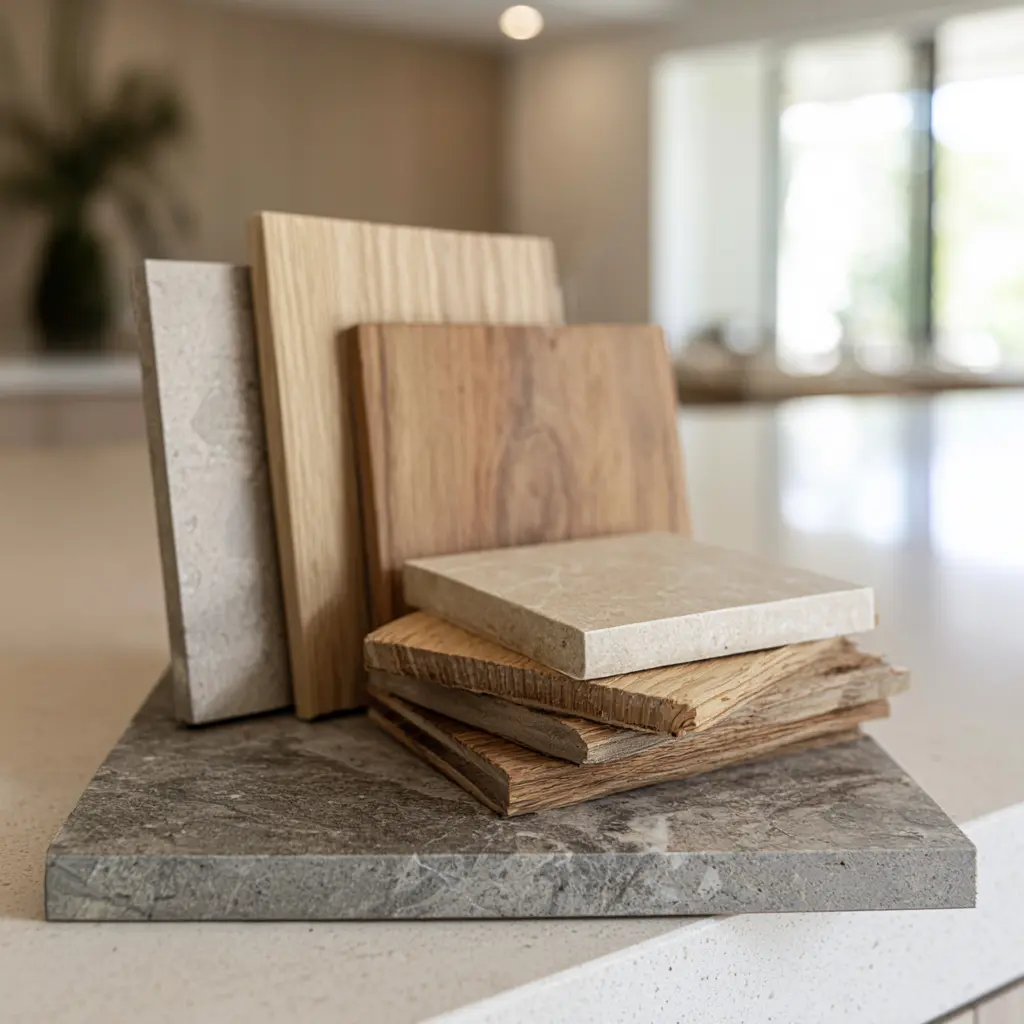
If a countertop or surface swap comes up as a cost-saving option, sintered stone from a local supplier like Sinno Stone is worth comparing against imported marble or granite — it holds up better against Malaysia’s humidity and daily cooking acids, often at a lower landed cost than imported natural stone.
How you raise the topic matters almost as much as what you ask for. A contractor who feels cornered into a discount tends to recover the margin somewhere you won’t notice until later — through a “necessary” variation order mid-project.
Showing a contractor a competitor’s itemized quote — without naming the company, if you’d rather keep it neutral — gives them something concrete to respond to. “Another quote came in RM4,000 lower on tiling, can you match the scope at that price?” is a specific, answerable question. “Can you make this cheaper?” is not.
Once a contract is signed and a deposit paid, your negotiating leverage drops sharply — any change becomes a variation order, usually priced less favourably than it would have been upfront. Raise every cost question, material substitution, and payment term before you sign anything.
Our guide to questions to ask your interior designer before signing the contract covers the exact points to clarify — including payment terms and variation order policy — while you still have room to negotiate them.

No — itemized negotiation is standard practice in the Malaysian renovation industry, and most contractors expect homeowners to compare quotes. What matters is negotiating specific line items with data, not just demanding a lower number.
Most homeowners can realistically negotiate 5–15% off a quotation through material substitution, timeline flexibility, or bundled scope, without touching labour quality or safety-critical work. Anything beyond that usually means something in the original quote was inflated — or something in the new price is being cut.
The approach is similar, but interior designers often have less room to move on their design fee since it reflects their time, while contractors have more flexibility on material and labour costs. Our comparison of contractors vs interior designers in Malaysia breaks down where each one’s pricing actually comes from.
Negotiating means working within one quotation to adjust specific terms while keeping scope and quality intact; choosing the cheapest quote often means accepting a different, reduced scope without realizing it. The first protects your renovation — the second usually costs more later.
Contractors tend to have more room to negotiate during quieter periods, outside the rush before Chinese New Year and Hari Raya when demand and pricing both climb. Booking during these off-peak windows often gets you a better price without asking for anything to be cut.
Every renovation quotation has room to move somewhere — but that room is in material choice, timing, and payment structure, not in the waterproofing membrane or the electrical wiring behind your walls. The homeowners who come out ahead aren’t the ones who negotiated the hardest; they’re the ones who knew exactly which line item they were negotiating and why.
Walk into every conversation with an itemized quote, a clear budget ceiling, and a firm list of what’s non-negotiable, and the discussion stops being a standoff and starts being a plan you and your contractor both understand. That’s the difference between a renovation that comes in under budget and one that comes back to bite you a year later.
RumaRuma exists to help you get to that clarity before you ever sit down with a contractor — from budgeting guides to the right questions to ask before you sign.
Get your quotes itemized, know your non-negotiables, and negotiate with the data in your hand — not just a hopeful number.
