Our Location
304 North Cardinal St.
Dorchester Center, MA 02124

A small condo doesn't need more furniture to feel luxurious — it needs more texture, layered with restraint.
A small condo doesn’t need more furniture to feel luxurious — it needs more texture, layered with restraint.
Walk into a condo unit with white walls, a grey sofa, and a matching coffee table, and it looks tidy. It also looks flat. The difference between a small space that feels “showroom” and one that feels genuinely designed almost never comes down to size — it comes down to texture.
This guide breaks down how to layer textures in a small condo using four core materials — stone, wood, fabric, and metal — without tipping into visual clutter. You’ll learn how much of each to use, how to balance warm and cool finishes, and where Malaysian humidity should shape your material choices.
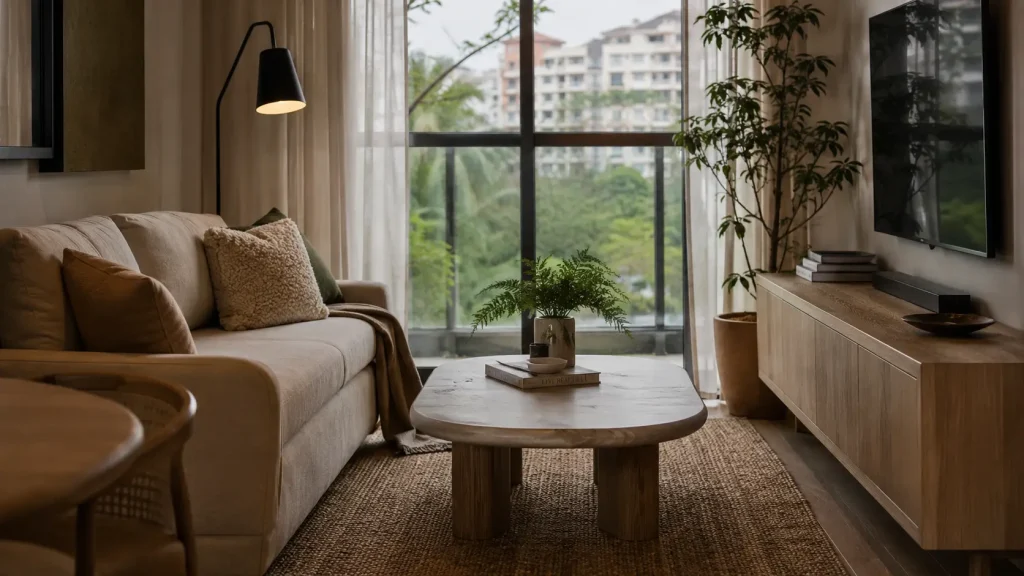
In a large home, colour and furniture layout do a lot of the visual work. In a condo — where floor area is tighter and sightlines are shorter — every surface is closer to the eye. That proximity means texture reads faster than colour does.
A flat, single-texture room (all matte paint, all smooth laminate) can look sterile even when the colour palette is well chosen. Layering textures gives a small room depth without adding footprint — a textured cushion or a stone side table doesn’t take up more floor space than a plain one, but it changes how the whole room feels.
This is also why texture-led styles like Japandi and wabi-sabi have become popular in Malaysian condos — they rely on textural luxury rather than ornamentation to avoid feeling bare.
Interior designers often use the 60-30-10 rule for colour. The same logic works well for texture in a small condo:
Skipping the base layer is the most common mistake — a room with only accent textures and no calm surfaces to anchor them will feel busy no matter how tasteful each individual piece is.
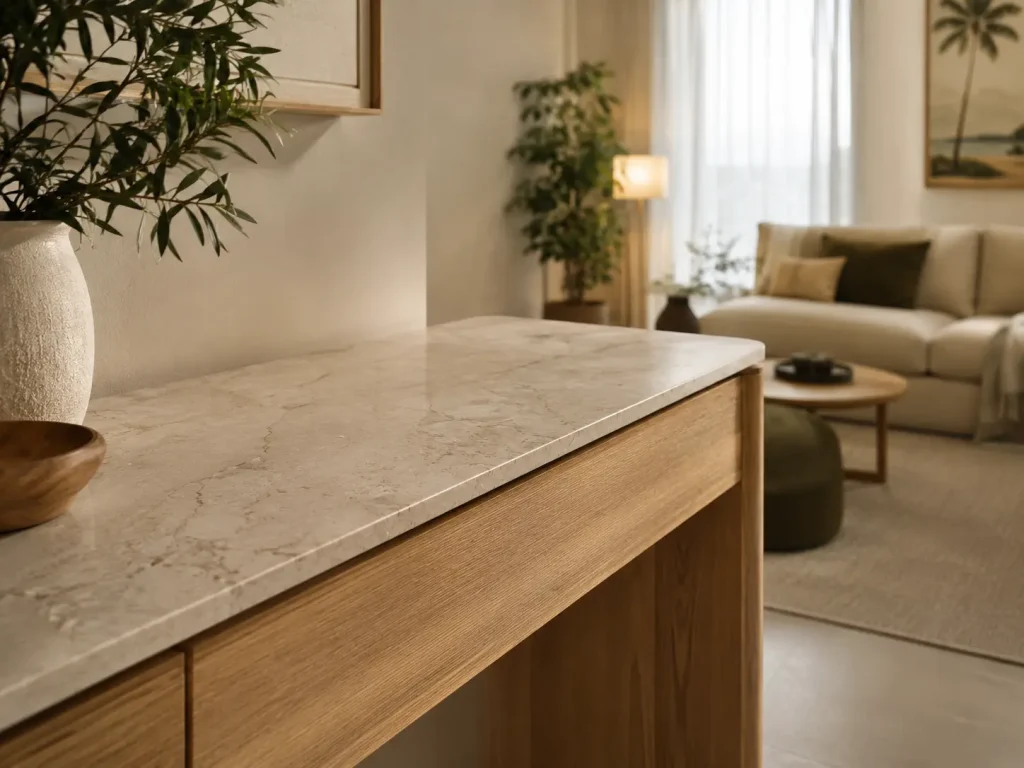
Stone — whether natural marble, granite, or engineered sintered stone — carries the most visual weight of the four materials. In a small condo, it works best in controlled doses: a countertop, a console top, a side table, or a feature wall panel rather than covering multiple surfaces.
For Malaysian condos, sintered stone and quartz composite are worth prioritising over natural marble in humid, high-traffic areas — they resist staining and don’t need the periodic sealing natural stone does. Sinno Stone’s sintered stone range is a solid local option here, offering the visual weight of marble with better tropical-climate performance for kitchen counters and TV consoles.
| Stone Type | Best Used For | Humidity Performance | Approx. Cost (per sq ft, installed) |
|---|---|---|---|
| Natural marble | Feature walls, low-traffic surfaces | Needs periodic sealing | RM 180 – RM 350 |
| Granite | Kitchen countertops | Good, low maintenance | RM 120 – RM 220 |
| Sintered stone | Countertops, TV consoles, wet areas | Excellent, non-porous | RM 150 – RM 280 |
| Quartz composite | Countertops, vanity tops | Very good | RM 130 – RM 240 |
Prices above are indicative estimates for reference only. Actual costs will vary depending on your interior designer, contractor, material choices, and project scope.
If stone is the anchor, wood is what keeps a small condo from feeling cold or clinical. Wood tones — whether a light oak console, a walnut dining table, or timber-look laminate flooring — soften hard surfaces and add the warmth that Malaysian homeowners tend to associate with a lived-in, welcoming space.
The easiest mistake to avoid is pairing wood and stone that fight each other in undertone. A cool, grey-veined stone paired with a warm honey-toned wood can look disjointed unless there’s a third neutral tying them together (usually the wall colour or flooring).
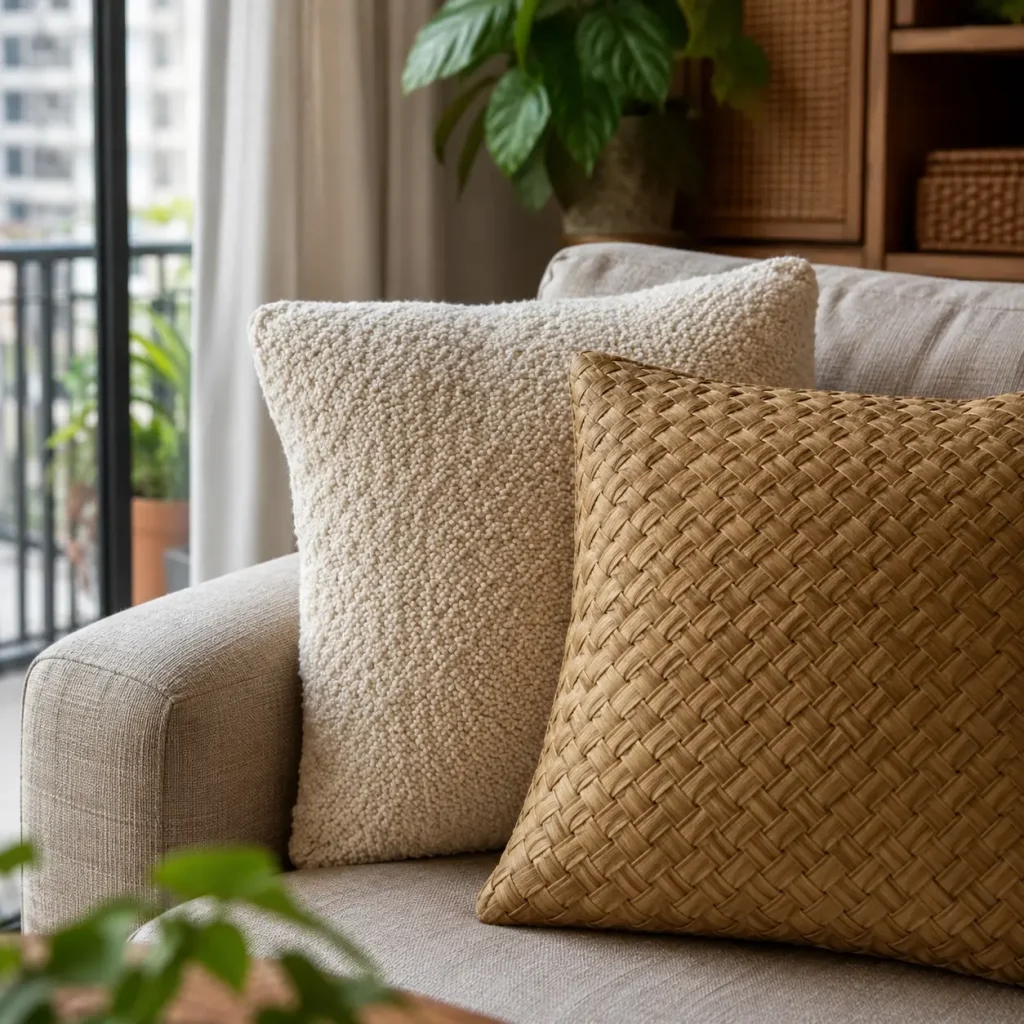
Fabric is the texture most homeowners already have — sofas, cushions, curtains, rugs — but it’s also the one most often left flat. A room full of the same weave and weight of fabric (say, a plain cotton sofa with matching plain cotton cushions) misses the chance to add tactile contrast.
In a small condo, limit yourself to two or three fabric textures per room — a linen sofa, a bouclé cushion, and a woven rug is enough. More than that competes with the stone and wood surfaces already doing visual work.
Metal is the smallest-dose material of the four, and that’s by design. A brass tap, a matte black pendant light, or a set of stainless steel cabinet handles catches the light and adds a crisp, finished edge — but too much metal in a small space quickly reads as cold or corporate.
The rule that matters most: pick one metal finish and repeat it across taps, handles, and light fixtures in the same room. Mixing brass door handles with chrome taps and black light fittings in one small space is one of the fastest ways to make a room feel unplanned.
| Element | Material | Role |
|---|---|---|
| Walls & ceiling | Painted matte finish | 60% base |
| Sofa upholstery | Linen | 60% base |
| Console or coffee table top | Sintered stone or wood | 30% contrast |
| Rug | Woven or rattan-weave | 30% contrast |
| Cushions | Bouclé, textured weave | 10% accent |
| Light fixtures & handles | Matte black or brushed brass | 10% accent |
Prices above are indicative estimates for reference only. Actual costs will vary depending on your interior designer, contractor, material choices, and project scope.
Layering textures in a small condo isn’t about adding more — it’s about choosing four or five materials with intention and letting each one earn its place. Stone anchors, wood warms, fabric softens, and metal finishes. Used in that proportion, even a modest-sized unit can feel considered rather than cramped.
The homeowners whose condos feel the most luxurious are rarely the ones who bought the most furniture — they’re the ones who paid attention to what each surface felt like, not just what it looked like in a photo. That’s a mindset shift more than a budget one.
If you’re exploring stone as your anchor texture — for a countertop, console, or feature wall — rumaruma is a good place to keep researching materials that hold up to Malaysia’s climate while looking the part.
Start with one stone surface, one wood piece, and two fabric textures — and build your small condo’s texture story from there.
