Our Location
304 North Cardinal St.
Dorchester Center, MA 02124

A realistic room-by-room renovation timeline for Malaysian homeowners — from permits and hacking to snagging and handover.
Most homeowners walk into a renovation expecting it to take two or three months. Many walk out the other side — six months later — wondering where the time went.
A full home renovation in Malaysia is a layered process: permits, contractors, materials, wet works, dry works, inspections, and snagging. Each phase depends on the one before it. Understanding that sequence upfront is the single best thing you can do before a single wall gets hacked.
This guide breaks down the full renovation timeline, phase by phase and room by room, so you know exactly what to expect — and what can throw the schedule off.
The renovation hasn’t started, but the clock already has. What happens before the contractors arrive determines how smoothly everything else goes.
Before any work begins, you’ll be meeting with your interior designer (ID) or contractor to finalise the scope of works, material selections, and layout changes. This back-and-forth typically takes:
Don’t rush this stage. Changes made on paper cost nothing. Changes made after hacking begins cost time and money.
For strata properties — condominiums, serviced apartments, and gated communities — renovation work requires approval from the Joint Management Body (JMB) or Management Corporation (MC) before any tools are picked up.
For landed properties, check with your local PBT (Pihak Berkuasa Tempatan) if you’re doing structural alterations. Not every renovation requires a council permit, but any work touching load-bearing walls or drainage systems usually does.
| Property Type | Approval Required From | Typical Wait Time |
|---|---|---|
| Condominium / Serviced Apartment | JMB or MC | 5–15 working days |
| Landed (Terrace / Semi-D) — minor works | None required | N/A |
| Landed — structural changes | Local PBT (e.g. DBKL, MBPJ) | 2–8 weeks |
| Commercial / SOHO | Building management + local authority | 2–8 weeks |

Once approvals are in hand, the physical work begins — and it begins loudly. Hacking (demolition of existing walls, tiles, ceilings, and fittings) is the first thing your contractor does on-site.
A typical 1,000 sq ft apartment takes 3–5 days to hack. A full landed home (2,500–3,000 sq ft) can take 7–10 days.
Hacking generates a substantial amount of waste. Your contractor is responsible for arranging debris removal — confirm this is included in your quotation. In strata buildings, check the JMB’s rules on disposal schedules, as many restrict debris removal to specific hours or days.
Mechanical and electrical (M&E) works run concurrently with — or immediately after — hacking. These are wet and concealed works, meaning they happen inside walls, floors, and ceilings before anything is sealed up.
This phase is where most hidden delays happen. If your contractor discovers corroded pipes, outdated wiring, or an undersized DB box, expect to add 3–7 days to address it before proceeding.
| M&E Work | Typical Duration |
|---|---|
| Plumbing (full apartment) | 5–10 days |
| Electrical rewiring (full unit) | 7–14 days |
| Waterproofing + curing | 3–5 days |
| Plastering & wall patching | 5–10 days |
With M&E works done and walls patched, the space starts to take visible shape. This phase covers false ceilings, feature walls, built-in joinery, and any new partitions.
Plaster ceiling — commonly called “POP ceiling” or gypsum ceiling — takes 1–2 weeks to install, depending on the complexity of the design. Allow additional time for:
Built-in furniture — wardrobes, TV feature walls, kitchen cabinets, study shelving — is one of the most time-intensive parts of a renovation. Custom carpentry is typically fabricated off-site and installed in batches.
If you’re sourcing kitchen cabinets from a modular brand, lead times can stretch 3–6 weeks from order to delivery. Confirm this early — carpentry delays are among the most common reasons renovations push past their deadline.
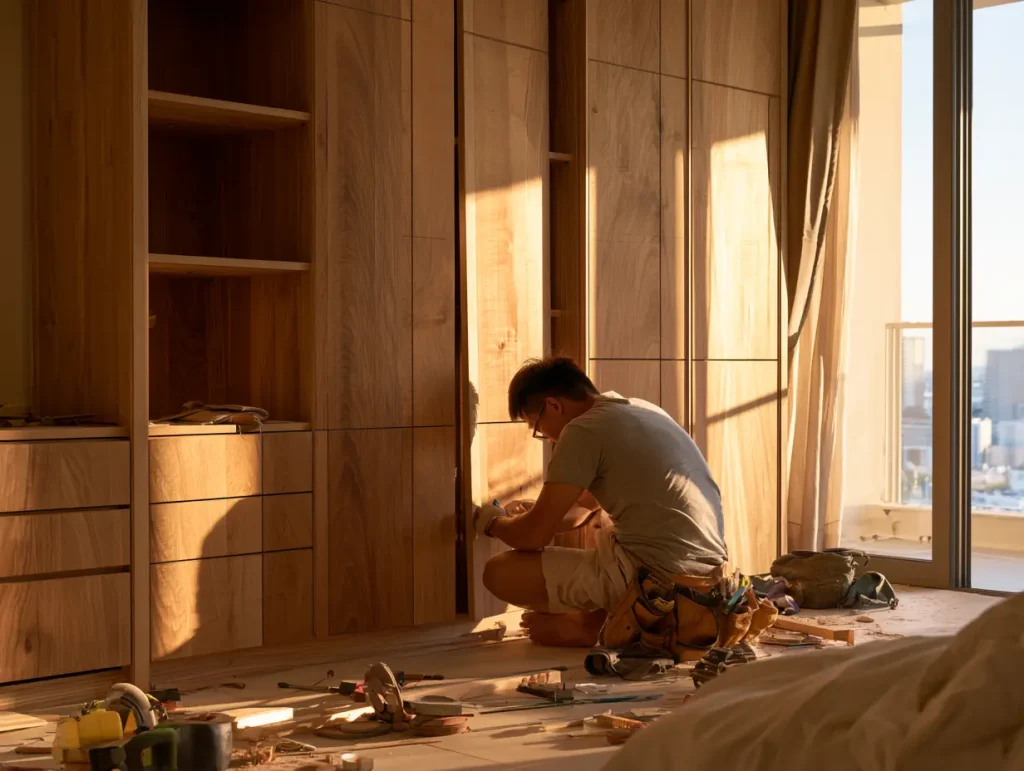
Tiling is one of the most visible works in a renovation — and one where quality is unforgiving. A skilled tiler working on a 1,000 sq ft apartment typically completes floor and wall tiling within 10–14 days.
Wall tiles in bathrooms must follow waterproofing — never before. Kitchen backsplash tiling usually happens after base carpentry is in place so tile cuts align cleanly with cabinet edges.
If you’re using timber flooring, vinyl plank, or SPC (stone-plastic composite) — popular choices in Malaysian homes for their humidity resistance — installation is significantly faster than tile work. A 1,000 sq ft floor can be laid in 3–5 days.
| Flooring Type | Installation Speed | Best For |
|---|---|---|
| Ceramic / Porcelain Tiles | 10–14 days (1,000 sq ft) | Wet areas, high-traffic zones |
| Rectified Large-Format Tiles | 12–16 days | Living rooms, open-plan areas |
| SPC / Vinyl Plank | 3–5 days | Bedrooms, dry areas |
| Solid Timber Flooring | 5–8 days | Bedrooms, studies |
Painting seems straightforward, but it’s a phase that punishes shortcuts. Done properly — with sealer coats, undercoat, and two finish coats — a full apartment takes 7–10 days.
Skipping the sealer coat is one of the most common corners cut in budget renovations. It shows up six months later as paint peeling at plaster joints or staining from alkaline concrete — and it costs far more to fix than to prevent.
With the structure, tiling, and painting complete, the final installations begin. This is the phase where the space transforms from a construction site into a home.
Ceiling fans, pendant lights, downlights, and feature lighting are installed in this phase — after painting is complete to avoid paint splatter on fittings.
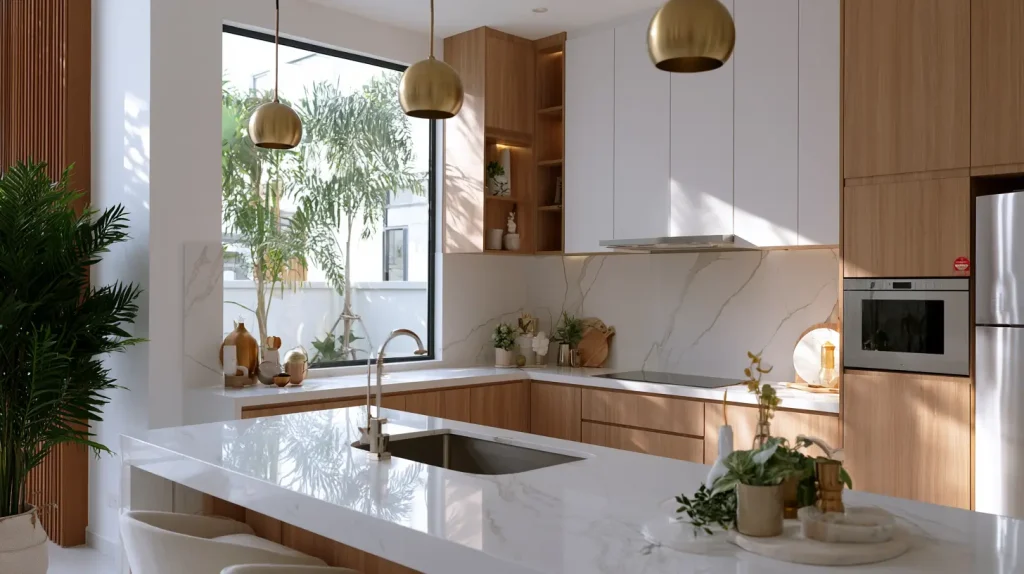
Snagging — the process of identifying and rectifying defects before final payment — is non-negotiable. Do not skip it.
Walk through every room with your contractor and document every issue in writing. Common snag items include:
A thorough snagging round typically takes 2–5 days to identify issues and another 3–7 days for rectification. Build this into your timeline — it is not optional, and releasing final payment before snagging is complete is one of the costliest mistakes a homeowner can make.
| Room | Typical Duration |
|---|---|
| Living & Dining Area | 6–10 weeks (concurrent with most phases) |
| Master Bedroom | 4–7 weeks |
| Common Bedrooms (×2) | 3–5 weeks each |
| Master Bathroom | 4–6 weeks |
| Common Bathrooms | 3–5 weeks |
| Kitchen | 5–8 weeks |
| Yard / Utility Area | 2–4 weeks |
Note: room timelines run concurrently, not sequentially. The overall renovation duration is determined by the critical path — typically the kitchen and wet areas.
Even with the best contractors, delays happen. Knowing the common causes helps you plan buffer time from the start.
As a general rule: take your contractor’s estimated timeline and add 20–30% as a realistic buffer. If they say 12 weeks, plan for 14–16.

| Home Type | Realistic Timeline |
|---|---|
| Small apartment (under 700 sq ft) | 8–12 weeks |
| Medium apartment (700–1,200 sq ft) | 10–16 weeks |
| Large apartment / SOHO (1,200–2,000 sq ft) | 14–20 weeks |
| Terrace house (2-storey) | 16–24 weeks |
| Semi-D or bungalow | 20–36 weeks |
A full home renovation in Malaysia rewards those who plan carefully and penalises those who rush the front end to save a few weeks. The contractors who tell you “three months, no problem” without even looking at a proper scope of work are the ones most likely to leave you in a half-finished unit at month five.
Knowing each phase, its dependencies, and its realistic duration is your best protection. It lets you hold contractors accountable to a schedule, flag delays before they compound, and make material decisions on time — not under pressure the day before installation.
Rumaruma is built for Malaysian homeowners who want to approach renovation with clarity and confidence. Browse our planning guides, room-by-room checklists, and real renovation breakdowns to go in prepared — not surprised.
Start mapping your renovation timeline now — because the time you spend planning is time you won’t spend fixing avoidable problems later.
