Our Location
304 North Cardinal St.
Dorchester Center, MA 02124

A step-by-step guide to setting a renovation budget you can actually stick to — no surprise bills, no stalled projects.
A step-by-step guide to setting a renovation budget you can actually stick to — no surprise bills, no stalled projects.
Most renovations in Malaysia don’t blow their budget because homeowners are careless. They blow it because the budget was never real to begin with — a round number pulled from an Instagram reel or a friend’s renovation, with nothing underneath it.
Learning how to set a realistic renovation budget means working backwards from what you can actually afford, not forwards from what you’d like to spend. This guide walks you through building that number properly — from affordability and category allocation to the contingency fund that saves most renovations from stalling halfway through.

Before you think about kitchens or flooring, you need a ceiling — a number you will not cross regardless of how tempting the marble countertop upgrade looks.
Work out how much you can pay in cash without touching your emergency fund, then decide separately whether you’ll top up with a renovation loan or personal loan. Mixing the two decisions early leads to budgets that quietly expand to match whatever financing is available, rather than what you actually need.
If you already have a mortgage and enough equity, secured renovation loans like Maybank’s Home + Reno Loan or RHB’s My1 Renovation Loan are worth checking first — they’re bundled with your home loan, so rates sit much closer to home loan pricing than a personal loan. The trade-off is speed: expect valuation and documentation to take weeks, with funds released in stages against contractor invoices rather than as a lump sum. If you’d rather not touch your property or need the money faster, an unsecured personal loan approved for renovation purpose is the quicker, if pricier, alternative.
A common rule of thumb among Malaysian designers is to cap renovation spend at around 10–20% of your property’s market value for a moderate refresh, and up to 30% for a full gut renovation. It’s not a hard law, but it stops the budget from drifting upward simply because a contractor’s quote came in higher than expected.
Your budget ceiling only means something once you understand what actually drives cost up or down. Scope of work, house type, and material choices can swing a renovation from RM20,000 to RM150,000 for a similarly sized home.
For a full breakdown of pricing by scope, house type, and room, see our 2026 renovation cost guide for Malaysian homes — it’s the companion reference to this budgeting guide.

A single lump-sum figure is easy to overspend against because nothing tells you when one category is eating into another. Splitting your ceiling into category budgets — with a suggested percentage range — gives you an early warning system.
| Category | Suggested % of Budget | Example (RM60,000 Total Budget) |
|---|---|---|
| Hacking & Structural Work | 10–15% | RM6,000–RM9,000 |
| Kitchen | 20–25% | RM12,000–RM15,000 |
| Bathroom(s) | 10–15% | RM6,000–RM9,000 |
| Flooring | 10–15% | RM6,000–RM9,000 |
| Built-in Carpentry | 15–20% | RM9,000–RM12,000 |
| Electrical & Lighting | 5–8% | RM3,000–RM4,800 |
| Painting | 3–5% | RM1,800–RM3,000 |
| Furniture & Decor | 10% | RM6,000 |
| Contingency Fund | 10–15% | RM6,000–RM9,000 |
Prices above are indicative estimates for reference only. Actual costs will vary depending on your interior designer, contractor, material choices, and project scope.
These percentages are a starting point, not a formula to follow blindly. If the kitchen is where you cook every day and the guest bathroom barely gets used, it’s reasonable to shift a few percentage points from bathroom to kitchen — just rebalance deliberately, and keep the total unchanged.
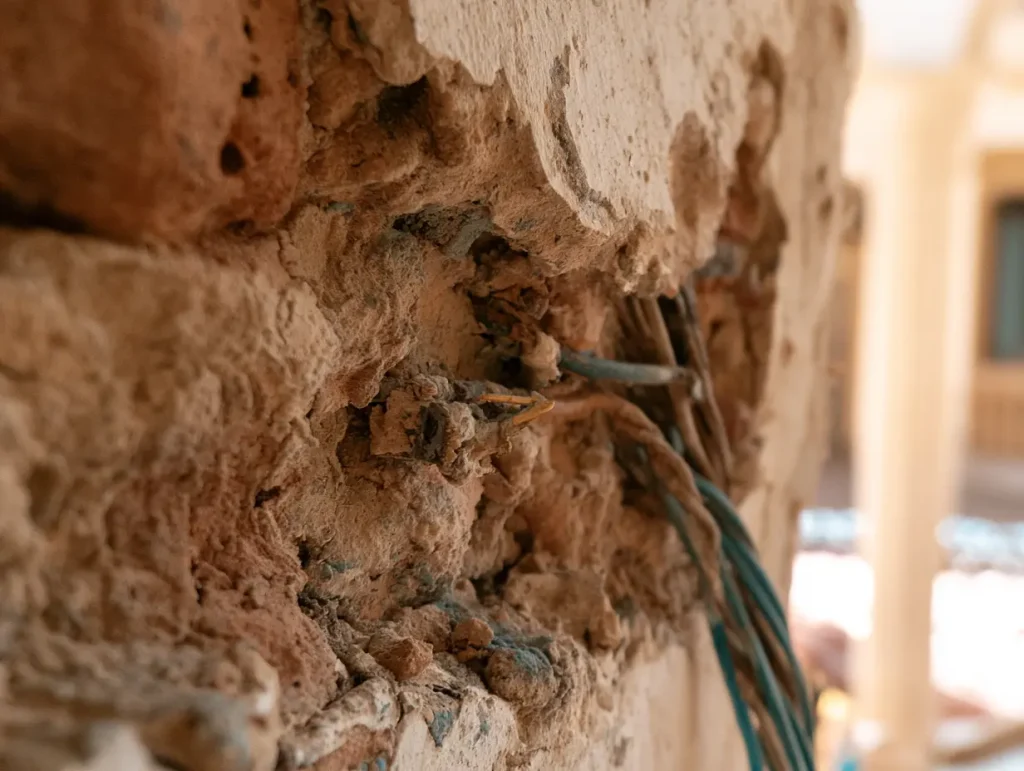
The single biggest reason Malaysian renovations run over budget isn’t poor planning — it’s what hides behind old walls and under old flooring. Rotten timber joists, outdated wiring that doesn’t meet current standards, or plumbing that needs full replacement only surface once hacking begins.
Treat this fund as untouchable until an actual problem shows up during hacking work. It is not a buffer for choosing the nicer tile — that decision belongs in your original category budget.
A budget built entirely on assumptions is still a guess. Before finalising your ceiling, get at least three written quotations from contractors or interior designers so your category budgets reflect real market pricing, not estimates from a blog post — including this one.
If you’re deciding whether to work with a contractor directly or bring in a designer, our guide on contractor vs interior designer in Malaysia breaks down how each affects your budget and scope of control. And before you start collecting quotes at all, it’s worth working through our complete renovation checklist for Malaysian homeowners so nothing gets missed in the planning stage.
A budget set before Day 1 is only useful if you keep checking it against reality once work begins. Variation orders — changes requested mid-project — are the most common way a well-planned budget quietly drifts.
A realistic renovation budget isn’t the smallest number you can get away with — it’s the number built from your actual affordability, broken into categories, and protected by a contingency fund that absorbs the surprises every Malaysian home eventually reveals.
Get this right before you meet your first contractor, and every quotation, material choice, and variation order afterward becomes a decision you’re making on purpose — not a scramble to stay afloat.
For more on what drives renovation costs and how to plan the rest of your project, explore the renovation planning guides on rumaruma.
Start your renovation budget with a number you’ve actually worked out — not one you’re hoping will be enough.
